

I never thought I’d become someone obsessed with what’s strapped to my wrist. For years, I dismissed the whole wearable technology trend as unnecessary gadgetry for people who couldn’t just listen to their bodies.
But then something shifted during a routine physical when my doctor mentioned my resting heart rate seemed elevated. Suddenly, the idea of continuous monitoring didn’t feel like tech obsession, it felt like self-preservation.
What Actually Separates These Devices
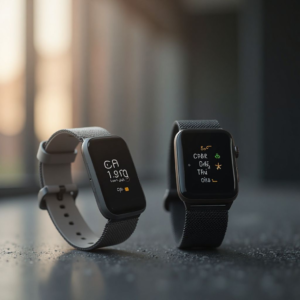 The basic difference between fitness trackers and smartwatches comes down to design philosophy from the ground up. Fitness trackers evolved from pedometers, those clunky clip-on devices your parents might have worn while power-walking around the mall.
They’re purpose-built instruments focused singularly on measuring your body’s movement and physiological responses throughout the day.
Smartwatches came from the completely opposite direction. Tech companies basically asked themselves how to shrink a smartphone onto your wrist, then later tacked on health tracking when they realized people actually cared about wellness metrics.
This origin story matters more than you’d think because it influences everything from battery life to user interface design.
When you’re wearing a fitness tracker like the Amazfit Band 7, you’re essentially wearing a specialized biometric instrument that happens to tell time. When you’re wearing an Apple Watch or Galaxy Watch, you’re wearing a tiny computer that happens to count your steps.
Neither approach is inherently better, they just serve fundamentally different purposes.
The Sensor Technology Behind the Numbers
Both device categories use optical sensors pressed against your skin to capture data, but what they do with that information varies dramatically. The sensors emit light, usually green LED light, into your skin and measure how much gets absorbed versus reflected back.
Since blood absorbs more light than surrounding tissue, the sensor can detect blood flow patterns and calculate your heart rate from the pulsing rhythm.
Advanced fitness trackers incorporate many sensor types working in concert. Accelerometers measure motion intensity across three axes, distinguishing between walking, running, and that weird arm-waving thing you do when you’re emphasizing a point during conversation.
Barometric altimeters detect elevation changes for tracking stair climbing or hiking ascents.
Some premium models include skin temperature sensors that can show stress levels or early illness before you consciously feel symptoms.
The accuracy question gets really interesting when you dig into the research. Testing shows that wearing identical activities can produce measurements varying by 15-25% between different manufacturer devices worn simultaneously.
That’s not a small margin of error when you’re making training decisions based on heart rate zones or recovery metrics.
The sensors struggle with darker skin tones, tattoos covering the sensor area, and even the amount of wrist hair creating gaps between skin and glass. Most manufacturers have improved algorithms to address the skin tone disparity issue, but gaps continue across device categories and price points.
The technology works best on light-colored, hairless skin with consistent sensor contact, which obviously doesn’t represent the majority of actual users.
Battery Life Considerations
Here’s where the philosophical divide becomes painfully practical. My Fitbit Inspire 3 lasts about ten days on a single charge.
I charge it while I’m doing laundry on Sunday mornings, and honestly forget about battery anxiety the rest of the week.
Meanwhile, my friend with an Apple Watch has developed this nightly ritual of placing it on the charging puck before bed, right next to his phone.
The Garmin Forerunner 55 pushes battery endurance to two full weeks under normal use, though that drops to around 20 hours if you’re running GPS continuously during long training sessions. This reveals the brutal engineering reality: GPS functionality absolutely devours battery power.
Tracking your route using satellite positioning can reduce battery life by up to 80% during a single extended workout.
Smartwatches demanding daily charging create behavioral friction that genuinely affects user experience. If you exercise first thing in the morning, you need to remember to charge overnight or risk your device dying mid-workout.
Some people solve this by charging during their morning shower, but that means missing sleep tracking data from the previous night and step counting during morning routines.
The Amazfit Bip 6 achieves 14-day battery life through aggressive software optimization and a stripped-down operating system that prioritizes sensor data collection over running Instagram on your wrist. That’s the tradeoff in its purest form: extended battery endurance versus smartphone functionality.
Communication and Connectivity Features
Smartwatches really earn their category distinction through communication capabilities. You can receive incoming calls, read and respond to text messages, check emails, and scroll through social media notifications without ever touching your phone.
For people working in corporate environments where constant availability feels mandatory, this creates genuine utility.
The Apple Watch combines so seamlessly with iPhone that some users genuinely leave their phones at home during errands, relying entirely on cellular-enabled watch functionality. You can make contactless purchases through Apple Pay, ask Siri to set reminders, and control smart home devices, all from your wrist.
Samsung Galaxy watches offer similar capabilities within the Android ecosystem, though the integration feels slightly less polished outside Samsung’s own phone lineup.
Fitness trackers generally skip these communication features entirely. You’ll get basic call and text notifications on most models, but responding needs grabbing your phone.
There’s no app ecosystem for installing Spotify or Starbucks ordering capabilities.
This limitation is intentional design philosophy rather than technological constraint. Fitness tracker manufacturers believe notification overload actually reduces motivation and increases stress.
Form Factor and Wearing Experience
The discrete wearability of fitness trackers appeals to people who don’t want visible technology broadcasting from their wrists during professional settings or formal occasions. Slim fitness bands like the Xiaomi Smart Band 9 practically disappear under long sleeves, weighing so little you genuinely forget you’re wearing them after a few days.
Smart rings represent the ultimate evolution of this discretion priority. The Oura Ring 4 and Samsung Galaxy Ring pack comprehensive health tracking into ceramic or titanium bands you wear on any finger.
They measure heart rate, body temperature, sleep patterns, and activity levels without any visible wrist presence.
The $499 price point positions them as premium choices for people who find traditional wrist-worn devices uncomfortable or aesthetically unacceptable.
Smartwatches embrace visibility as part of their identity. Watch face customization, interchangeable bands ranging from sport silicone to leather dress straps, and substantial screen real estate make them fashion statements as much as functional tools.
Samsung reintroduced rotating bezels on the Galaxy Watch 6 specifically because users missed the tactile satisfaction of physical controls versus touchscreen-only interfaces.
I’ve noticed that wrist comfort during extended wear varies dramatically between models and people. Some people develop skin irritation from continuous band contact, especially during humid conditions when sweat gets trapped against skin. The bacterial composition of your wrist skin can actually change from constant wearable contact, potentially increasing susceptibility to minor infections in some users.
The Cost Equation and Market Positioning
Budget fitness trackers like the Xiaomi Smart Band 8 at roughly $40 deliver essential step counting, heart rate monitoring, and sleep tracking without premium materials or refined interfaces. These devices sacrifice display quality, waterproofing depth ratings, and advanced metrics but provide legitimate health tracking functionality for people just starting their wellness routine.
Mid-range options like the Fitbit Charge 6 around $159 add features like NFC mobile payments, enhanced GPS accuracy, and integration with premium fitness apps. This price bracket represents the sweet spot for serious recreational athletes who want comprehensive tracking without smartwatch communication overhead.
Premium smartwatches command substantially higher price points. The Garmin Epix Pro starts around $549, while the Garmin Forerunner 970 exceeds $749 for top-tier configurations.
These prices reflect increased processing power for running complex operating systems, superior display technology using AMOLED or OLED panels, and extensive app ecosystem support requiring ongoing software development.
The subscription model trend deserves specific mention because it’s becoming increasingly prevalent. Some manufacturers lock advanced features behind monthly subscription paywalls even after you’ve purchased the hardware.
This creates ongoing costs that dramatically alter the total ownership expense calculation over typical device lifespans of two to three years.
A $200 device requiring a $10 monthly subscription costs $560 over three years. Suddenly that $400 device with no subscription seems comparatively reasonable.
Health Tracking Beyond Basic Fitness
The medical applications of fitness trackers extend surprisingly far into clinical territory. Continuous glucose monitoring integration enables people managing diabetes to watch blood sugar levels in real-time through their wrist-worn device.
When paired with CGM sensors inserted under the skin, fitness trackers display current glucose readings and alert users when levels become dangerously low or high.
This transcends recreational step counting and becomes genuinely life-preserving medical technology.
ECG functionality on devices like the Apple Watch can detect atrial fibrillation patterns that users might otherwise miss until experiencing stroke or heart failure symptoms. Blood oxygen saturation monitoring, which became popular during COVID-19, continues serving as an early warning system for respiratory issues and sleep apnea.
Sleep tracking features analyze movement patterns, heart rate variability, and respiratory rate to distinguish between light sleep, deep sleep, and REM phases. Advanced models provide sleep quality scores incorporating factors like time to fall asleep, nighttime disturbances, and sleep duration relative to your age-based recommendations.
However, the accuracy limitation here is significant because fitness trackers cannot truly distinguish between lying perfectly still and actually sleeping, leading to inflated sleep quality scores for people who rest quietly while awake.
Ecosystem Lock-In and Compatibility Problems
Apple Watch needs iPhone ownership, creating deliberate ecosystem dependency that strengthens customer retention across product lines. You literally cannot activate or use an Apple Watch without an iPhone, even if you own an iPad or Mac.
This represents aggressive platform control that some users appreciate for seamless integration and others resent for limiting hardware choices.
Wear OS watches function across various Android devices but experience optimal performance with Google Pixel phones. Samsung watches work with any Android phone but integrate most smoothly with Samsung Galaxy devices, offering exclusive features like automatic workout detection refinement and enhanced sleep coaching.
Fitness tracker data typically synchronizes across many smartphone platforms through manufacturer cloud services. Garmin, Fitbit, and Xiaomi apps function on both iOS and Android with feature parity, though you’re still locked into their specific data ecosystem.
Exporting your historical health data for migration to competing platforms ranges from cumbersome to practically impossible, depending on the manufacturer.
The Accuracy Problem Nobody Talks About
Step counting shows reasonable accuracy during normal walking but struggles with irregular gaits, wheelchair use, and stationary arm movements during activities like washing dishes or typing. I’ve personally recorded over 3,000 steps while sitting at my desk during an intense writing session involving lots of hand gestures and arm movements.
Calorie burn calculations stay fundamentally theoretical, applying population-average metabolic equations to person physiology without actual biochemical measurement. The algorithms incorporate heart rate data, age, weight, and movement intensity, but person metabolic efficiency varies so dramatically that two people performing identical activities can burn wildly different calorie amounts.
Heart rate monitoring accuracy depends heavily on sensor contact quality, skin tone, ambient lighting conditions, and tattoo presence over the sensor area. Darker skin absorbs more of the LED light, requiring more sophisticated sensor technology to achieve comparable accuracy to measurements on lighter skin.
Real-World Application Scenarios
For serious athletes training for marathons, triathlons, or competitive cycling events, dedicated fitness trackers from Garmin or Polar offer superior workout analysis compared to general-purpose smartwatches. The VO2max estimates, lactate threshold detection, training load calculations, and recovery time recommendations need specialized algorithms refined over years of sports science research.
Corporate professionals who need constant email access and calendar notifications benefit substantially from smartwatch connectivity. Being able to glance at your wrist during meetings to check incoming messages without conspicuously grabbing your phone provides genuine professional utility in certain workplace cultures.
People managing chronic health conditions find value in both categories depending on specific needs. Diabetes management favors fitness trackers with CGM integration. Cardiac patients benefit from smartwatches offering medical-grade ECG functionality.
Sleep disorder patients need devices with advanced sleep architecture analysis regardless of category.
Casual wellness enthusiasts who simply want daily step counts and general activity awareness can choose either category based primarily on battery life preferences and budget constraints. The health tracking fundamentals have reached parity, so the decision becomes about lifestyle fit rather than capability gaps.
People Also Asked
Which is more accurate, fitness tracker or smartwatch?
Both devices use similar optical heart rate sensors, so accuracy differences come down to specific manufacturer implementation rather than device category. Independent testing shows both fitness trackers and smartwatches can vary by 15-25% compared to medical-grade chest strap watches.
Premium models from Garmin, Polar, and Apple generally perform better than budget options regardless of category.
Can I use a fitness tracker without a smartphone?
Most fitness trackers store several days of activity data internally before requiring smartphone sync. You can wear the device and collect step counts, heart rate, and sleep data without constant phone connection.
However, initial setup, firmware updates, and viewing detailed historical data need smartphone access through the manufacturer’s app.
Do smartwatches count steps as accurately as fitness trackers?
Step counting accuracy depends more on accelerometer quality and algorithm sophistication than device category. Premium smartwatches from Apple and Samsung count steps as accurately as dedicated fitness trackers.
Budget smartwatches may show less consistency because manufacturers prioritize other features over step counting refinement.
How long does a fitness tracker battery really last?
Basic fitness trackers typically last 7-14 days on a single charge under normal use conditions. This assumes continuous heart rate monitoring, sleep tracking, and several notification alerts per day.
Battery life drops significantly with continuous GPS use during outdoor workouts, sometimes reducing endurance to 15-20 hours for ultra-endurance tracking sessions.
Can you answer calls on a fitness tracker?
Most fitness trackers display incoming call notifications but need you to grab your phone to actually answer. Some premium fitness trackers like the Fitbit Charge 6 allow call answering through the device using Bluetooth connection to your phone, but this feature stays uncommon in the fitness tracker category compared to standard smartwatch functionality.
Is it worth buying a smartwatch for fitness tracking?
Smartwatches provide adequate fitness tracking for recreational athletes and casual wellness enthusiasts. The health metrics quality has improved substantially across all major smartwatch platforms.
However, serious athletes training for competitive events benefit from dedicated fitness trackers offering more specialized workout analysis, longer battery life during GPS tracking, and superior sensor accuracy.
Do fitness trackers work with tattoos?
Optical heart rate sensors struggle with tattoos covering the sensor area because ink pigmentation interferes with light penetration and reflection. Dark, densely saturated tattoos create the most interference.
Some users report improved readings by wearing the device slightly higher or lower on the wrist to find a less tattooed area, or switching to chest strap heart rate monitors for workout tracking.
Key Takeaways
Fitness trackers prioritize battery life, discrete form factors, and specialized health metrics over smartphone connectivity and app ecosystems. They serve people who want comprehensive wellness tracking without communication overhead or daily charging requirements.
Smartwatches function as wrist-worn smartphone extensions that happen to track health metrics. They serve people who value constant connectivity, mobile payments, voice assistant integration, and rich app ecosystems despite requiring daily charging.
Battery endurance represents the most practical distinction. Fitness trackers lasting 10-14 days versus smartwatches requiring daily charging creates fundamentally different usage patterns and behavioral friction.
Sensor accuracy varies substantially between manufacturers and device categories, with measurement differences of 15-25% common when wearing many devices simultaneously. No consumer wearable achieves medical-grade accuracy despite marketing implications.
Ecosystem lock-in affects long-term ownership costs and device flexibility. Apple Watch needs iPhone ownership, while fitness trackers generally work across platforms with feature parity.
Medical applications like continuous glucose monitoring integration and ECG functionality extend wearable utility far beyond recreational fitness tracking into clinical health management territory.
Form factor innovation through smart rings provides comprehensive health tracking without visible wrist-worn technology for users prioritizing aesthetic discretion.
Total ownership costs including subscription fees for premium features can dramatically exceed initial hardware purchase prices over typical two-to-three-year device lifespans.