

When was the last time you poured a glass of juice and felt confident about what you were drinking? Not just whether you liked the taste, but whether those nutrients you spent good money chasing were still actually present by the time the liquid hit your glass?
I’ve watched people spend hundreds on organic produce, juice it with finish confidence, then wonder why they don’t experience the health transformation they expected. Your juicer matters considerably more than most people realize. The difference between cold press and centrifugal extraction goes beyond marketing noise.
Once you understand what actually happens to your fruits and vegetables during processing, the choice becomes obvious.
How Each Extraction Method Works
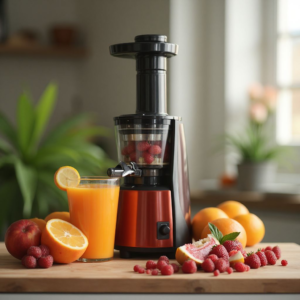 The mechanical difference between these two juicing approaches is substantial when you examine them closely. Cold-pressed juicers use a slowly rotating auger operating around 43 RPM that crushes produce against a strainer containing over 6,600 micro-perforations.
The approach resembles a careful, methodical squeeze as opposed to anything violent or aggressive.
The produce gets compressed systematically, opening cellular membranes without destroying them. The slow rotation provides sustained pressure that gives plant material time to release liquid naturally.
Think of it like wringing out a wet towel slowly and thoroughly versus shaking it violently and hoping water flies off.
Centrifugal juicers take the finish opposite approach. They use rapidly spinning blades that shred your fruits and vegetables at thousands of RPM.
The mechanism works like a high-speed grater that tears through produce, then relies on centrifugal force to spin the juice outward through a mesh screen.
The process is fast and aggressive, generating measurable heat from all that friction.
The engineering philosophy behind each method reveals everything about their performance characteristics. Cold-pressing prioritizes nutrient preservation through patient, controlled extraction.
Centrifugal juicing prioritizes speed and convenience, accepting nutrient degradation as an unavoidable trade-off.
Neither approach is inherently wrong, but they serve fundamentally different purposes.
The Vitamin A Loss That Changes Everything
 Here’s something that genuinely shocked me when I first encountered the research data: centrifugal juicers destroy nearly four times more vitamin A compared to cold-pressed models. We’re looking at a 46% loss versus only 12% loss from identical produce.
That’s not a minor variation, that’s catastrophic if you’re juicing specifically for nutritional benefits.
Vitamin A supports vision, immune function, and cellular communication throughout your body. When you’re losing nearly half of it before you even take a sip, you need to question whether you’re gaining any meaningful advantage over simply eating the whole fruit in the first place.
The really interesting part is that vitamin C levels stay relatively stable between both methods. So why does vitamin A experience such dramatic losses?
The answer comes down to heat sensitivity and oxidation vulnerability.
Vitamin A degrades rapidly when exposed to heat and oxygen, which is exactly what happens when high-speed blades generate friction and introduce massive amounts of air into your juice.
Laboratory testing confirmed this with thermal imaging equipment. Centrifugal juice measures around 20.1°C while cold-pressed juice sits at 19.2°C.
That seems like a tiny difference, barely noticeable to human perception.
But that temperature differential represents ongoing oxidative processes that continue degrading nutrients even after extraction finishes. The damage doesn’t stop when you turn off the machine.
What the Pineapple Test Revealed
A study from the Izmir Institute of Technology in Turkey tested juice yield across many fruits using both extraction methods. The pineapple results were honestly mind-blowing: cold-pressing achieved a 92% yield while centrifugal extraction managed only 47%.
Read that again carefully.
From the exact same pineapple, cold-pressing produces nearly double the juice volume.
I’m not talking about some exotic fruit with unusual cellular properties. This is pineapple, a common fruit you can buy at any grocery store.
And you’re literally throwing away half of its liquid content with centrifugal juicing.
The economic implications hit hard when you calculate produce costs over time. Someone juicing daily with a centrifugal machine needs substantially more fruit to produce the same volume of juice.
Over weeks and months, that’s real money wasted on produce that ends up as damp pulp instead of nutrient-dense liquid in your glass.
The pulp quality tells the finish story visually. Cold-pressed pulp comes out dry and compact, indicating thorough extraction.
You’ve gotten nearly everything useful out of that produce.
Centrifugal pulp stays wet and fibrous because the juice simply didn’t come out. Your produce cost doesn’t just disappear into thin air, it goes directly in the trash bin.
Why Centrifugal Juice Spoils Overnight
I’ve had countless people tell me their juice “doesn’t taste right” the next day. They blame the produce quality, or their refrigerator temperature, or some mysterious spoilage issue they can’t identify.
The reality is simpler and more straightforward: centrifugal juice degrades rapidly after extraction.
Within 24 hours, you’ll notice obvious separation with water floating on top and nutrients settling at the bottom. The smell changes, becoming slightly sour or just “off” in a way that’s hard to describe but impossible to ignore.
The taste dulls considerably, losing that bright freshness you experienced immediately after juicing.
This happens because oxidation continues aggressively after extraction. The violent mechanical action introduces massive amounts of air into centrifugal juice, and those oxygen molecules keep breaking down vitamins and phytonutrients throughout storage.
You’re essentially watching your juice die slowly in the refrigerator.
Cold-pressed juice behaves completely differently. It stays pleasant and drinkable for 2-3 days with minimal separation or flavor degradation.
The juice maintains its vibrant color, fresh smell, and nutritional density because the extraction process minimized oxidation from the beginning.
You’re starting from a position of strength as opposed to damage control.
This storage difference fundamentally changes how you can integrate juice into your daily routine. Centrifugal juice forces daily preparation.
You make it, you drink it immediately, end of story.
There’s no flexibility. Cold-pressed juice enables batch preparation.
You can juice on Sunday and have quality juice through Tuesday or Wednesday without noticeable quality loss.
For busy professionals or parents managing complex schedules, that flexibility matters enormously. The time investment drops from daily to twice-weekly, and you’re not locked into rigid morning routines just to maintain your juicing habit.
The Complete Cost Analysis
Cold-pressed juicers cost significantly more upfront. A quality model runs 2-3 times the price of an entry-level centrifugal juicer.
That price gap creates genuine hesitation, especially if you’re new to juicing and unsure about long-term commitment.
Nobody wants to drop several hundred dollars on equipment they might not use consistently.
But the finish economic picture extends well beyond initial purchase price. The superior yield efficiency of cold-pressed juicers means you need substantially less produce per serving.
That pineapple yielding 92% instead of 47% translates to nearly double the servings from the same grocery purchase.
Over months and years, the reduced produce consumption accumulates into real savings that offset the higher equipment cost. Add in the extended shelf life enabling batch preparation, and you’re reducing both money spent on produce and time invested in daily juicing sessions.
The value proposition shifts dramatically when you account for ongoing operational costs as opposed to just sticker price.
I ran the numbers for my own juicing habit. With daily green juice consumption, the cold-pressed machine paid for its price premium within about eight months purely through produce savings.
Everything beyond that became ongoing cost reduction compared to what I would have spent with centrifugal extraction.
The math wasn’t even close once I tracked it carefully.
The monthly perspective reveals what genuinely matters: cold-pressed juicers provide better value despite requiring higher initial investment. Centrifugal juicers are authentically more affordable for beginners or occasional users, but frequent juicers benefit financially from cold-pressing within their first year of ownership.
How Leafy Greens Change the Equation
If you’re juicing primarily hard fruits and vegetables like apples, carrots, and beets, both methods produce reasonable results, though with different efficiency levels. But leafy greens completely change the conversation and decision criteria.
Centrifugal juicers perform terribly with spinach, kale, celery, and similar produce. The high-speed blades simply can’t extract juice effectively from leaves.
The centrifugal force isn’t enough to separate liquid from fibrous plant material, so you end up with minimal juice and mostly waste.
You’re essentially shredding expensive greens into an inedible mess.
Cold-pressed juicers excel exactly where centrifugal models fail completely. The pressing mechanism provides sustained pressure that gives leaves time to release their liquid content.
The auger methodically crushes leafy material against the strainer, extracting juice that centrifugal force simply can’t access no matter how fast the blades spin.
For anyone prioritizing green juice for its concentrated nutritional density, this performance difference becomes the deciding factor. You’re not choosing between slightly different extraction efficiencies anymore, you’re choosing between functional and non-functional equipment for your specific needs.
I tested this with a simple spinach and celery combination using both juicer types. The cold-pressed version produced rich, dark green juice with noticeable body and complex flavor.
The centrifugal try yielded thin, pale liquid that honestly looked more like flavored water than actual juice.
The color difference alone told you everything about the nutritional content disparity.
Commercial Operations and HPP Technology
Commercial cold-pressed juice operations use high-pressure processing (HPP) to extend shelf life dramatically while maintaining nutritional quality. This technology applies ultra-high pressure, often exceeding 400 megapascals, to packaged juice, inactivating microorganisms and enzymes that cause spoilage.
The impressive part is that HPP accomplishes this without heat. Traditional pasteurization uses heat to kill bacteria, but that same heat destroys the nutrients you’re trying to preserve in the first place.
HPP maintains cold temperatures throughout processing, so heat-sensitive vitamins and enzymes survive intact.
With HPP treatment, commercially produced cold-pressed juice maintains shelf life of 30-45 days. That’s fundamentally different from the 2-3 day window for home-pressed juice, and it explains why you see cold-pressed juice in grocery stores with extended sell-by dates that seem almost impossible.
This technology confirms the preservation advantages of cold-pressing at industrial scale. Professional operations recognize and leverage these same nutrient retention principles because the science behind them is sound and commercially valuable.
The Flavor Difference Nobody Mentions
Cold-pressed juice tastes noticeably different from centrifugal juice, even when using identical produce combinations. The flavor presents as richer, more unified, with better balance between sweet and savory components.
You can actually taste person ingredients distinctly as opposed to everything blending into generic sweetness.
With a basic apple-carrot-celery combination, cold-pressed juice delivers complex, layered taste where you can identify each ingredient contribution. Centrifugal juice from the same recipe tastes sweeter, thinner, with the apple flavor dominating everything else and drowning out the more subtle vegetable notes.
That difference stems from extraction completeness. Cold-pressing releases the full spectrum of flavor compounds from each ingredient.
Centrifugal extraction pulls primarily water and simple sugars, leaving complex flavor molecules trapped in the pulp that gets discarded.
The mouthfeel differs substantially too. Cold-pressed juice feels fuller, almost creamy in some combinations.
There’s body to it that makes each sip feel substantial and satisfying.
Centrifugal juice feels lighter and more watery, less satisfying per volume consumed. You end up drinking more to feel like you’ve consumed something meaningful.
Color vibrancy follows the same pattern. Cold-pressed juice displays deeper, richer pigmentation that stays stable throughout storage.
That visual richness correlates directly with phytonutrient concentration.
Darker juice genuinely contains more bioactive compounds, not just more dye or pigment.
Practical Operation Realities
Cold-pressed juicers take longer to process produce. There’s no getting around that fact.
Feeding vegetables through the auger and waiting for methodical extraction requires patience that centrifugal machines don’t demand.
For quick morning preparation when you’re already running late, that time difference matters practically.
Centrifugal juicers let you go from whole produce to finished juice in minutes. Cold-pressed juicers need considerably more time, particularly for harder vegetables or large quantities.
If you’re making juice for many people, that time investment multiplies accordingly.
The noise difference is substantial though, and this matters more than people expect. Cold-pressed juicers operate nearly silently, producing just a gentle hum from the motor.
Centrifugal juicers sound like industrial machinery, with high-pitched whining from the spinning blades that honestly gets annoying if you’re juicing in the early morning when other people are sleeping.
Cleanup complexity varies by specific model design, but well-designed cold-pressed juicers minimize maintenance burden. Models like the Canoli C16 use hinged pulp outlets that make clearing residue simple and straightforward.
Most parts rinse clean quickly under running water, and total cleanup takes about five minutes once you understand the procedure.
Centrifugal juicers are lighter and easier to move around, which matters if you’re storing equipment between uses or have limited counter space. Cold-pressed juicers weigh substantially more and occupy more area.
If your kitchen is already crowded, that physical footprint becomes a legitimate practical concern worth considering.
When Centrifugal Makes Sense
I need to be honest about scenarios where centrifugal juicing stays the rational choice. If you’re genuinely budget-constrained and can’t afford the upfront investment in cold-pressed equipment, an affordable centrifugal juicer let’s you start juicing now as opposed to waiting months to save money.
For occasional juicers who make juice once or twice weekly and drink it immediately, the nutrient degradation and yield inefficiency don’t accumulate into significant problems. You’re not wasting that much produce, and you’re consuming the juice before oxidation progresses far.
If you’re juicing primarily for hydration and enjoyment as opposed to concentrated nutritional benefits, centrifugal juice serves that purpose adequately. Not everyone juices for therapeutic nutrition.
Some people just like fresh juice as a beverage option.
That’s completely valid.
The speed advantage matters genuinely for specific lifestyle situations. Someone with chaotic mornings and minimal time for preparation benefits from centrifugal efficiency.
Five minutes versus fifteen minutes might be the difference between juicing and skipping it entirely.
Building Your Personal Strategy
Your optimal approach depends entirely on your specific priorities, budget, and consumption patterns. Someone juicing daily with leafy greens as primary ingredients needs cold-pressed equipment.
The performance gap is too substantial to ignore or rationalize away.
Someone juicing occasionally with hard fruits and vegetables could function adequately with centrifugal extraction, particularly if budget is the primary constraint. The nutritional compromise exists but might be acceptable given person circumstances and goals.
For serious health optimization, managing chronic conditions, supporting athletic recovery, or pursuing therapeutic nutrition, cold-pressed juicing becomes essentially mandatory. The added nutritional advantage over weeks and months creates measurable health impacts that centrifugal juice simply can’t match regardless of consumption volume.
Frequently Asked Questions
Does cold press really preserve more nutrients?
Yes, cold press juicers preserve significantly more nutrients, particularly heat-sensitive vitamins like vitamin A. Studies show cold pressing retains 88% of vitamin A compared to only 54% with centrifugal juicing.
The slower extraction process minimizes oxidation and heat generation that destroys delicate compounds.
How long does cold pressed juice last in the fridge?
Cold pressed juice maintains quality for 2-3 days when stored properly in an airtight container in the refrigerator. Centrifugal juice degrades within 24 hours because of higher oxidation levels during extraction.
For maximum freshness, store juice in the coldest part of your refrigerator in a completely full container to minimize air exposure.
Can you juice leafy greens in a centrifugal juicer?
Centrifugal juicers perform poorly with leafy greens like spinach, kale, and celery. The high-speed spinning action can’t effectively extract juice from fibrous leaves, resulting in minimal yield and mostly waste.
Cold press juicers excel at leafy green extraction through sustained pressure that gives leaves time to release their liquid.
Which juicer type has better yield?
Cold press juicers achieve substantially better yield across most produce types. Research shows cold pressing extracts 92% of available juice from pineapple compared to only 47% from centrifugal juicing.
This yield difference translates to significant produce cost savings over time, often offsetting the higher initial equipment investment within the first year.
Are cold press juicers worth the extra cost?
For frequent juicers consuming daily or near-daily juice, cold press juicers provide better value within 8-12 months through reduced produce costs and extended shelf life enabling batch preparation. Occasional juicers or those primarily using hard fruits may find centrifugal juicers adequate for their needs at a lower price point.
What’s the difference between masticating and cold press juicers?
Masticating juicers and cold press juicers refer to the same technology using a slowly rotating auger to crush and press produce. The terms are used interchangeably in the juicing industry.
Both describe the gentle extraction method that operates at low speeds to minimize heat and oxidation.
Why does centrifugal juice separate so quickly?
Centrifugal juice separates rapidly because the high-speed extraction introduces massive amounts of air, accelerating oxidation processes. The violent mechanical action breaks down cellular structures more completely, releasing enzymes that continue degrading the juice during storage.
Cold pressed juice experiences minimal air incorporation, slowing these degradation processes.
Can you make nut milk with a centrifugal juicer?
Centrifugal juicers don’t work well for nut milk production because they can’t effectively extract liquid from soaked nuts. Cold press juicers handle nut milk preparation efficiently through sustained pressing action that thoroughly extracts liquid from nut pulp.
Many cold press juicer owners use their equipment for both juice and plant-based milk production.
Key Takeaways
Cold-pressed juicers preserve dramatically more nutrients, with vitamin A retention nearly four times better than centrifugal extraction, making them essential for anyone juicing primarily for health benefits.
Juice yield differences are substantial, with cold-pressing extracting up to twice as much juice from the same produce, creating long-term economic advantages despite higher upfront costs.
Shelf life varies drastically between methods, with cold-pressed juice maintaining quality for 2-3 days while centrifugal juice degrades within 24 hours, fundamentally changing how you can integrate juicing into your schedule.
Leafy green extraction performance heavily favors cold-pressed juicers, making them essentially mandatory for anyone prioritizing green juice consumption as part of their nutritional strategy.
Centrifugal juicers stay valid choices for budget-conscious beginners, occasional users, and situations prioritizing speed over nutritional optimization, particularly when juicing primarily hard fruits and vegetables.
The decision ultimately reflects personal priorities: immediate affordability versus long-term value, convenience versus quality, casual enjoyment versus therapeutic nutrition.