

Fast Facts:
- Small apartment kitchens can maintain full culinary capability through strategic appliance selection that prioritizes multi-functionality over single-purpose devices.
- The average studio or one-bedroom apartment kitchen has less than 30 square feet of usable counter space, making every inch count.
- Investing in just five to seven well-chosen compact appliances can replace the functionality of fifteen or more traditional kitchen tools.
- Modern compact appliances consume 40-60% less energy than their full-sized counterparts while delivering comparable cooking performance.
I’ve lived in my share of cramped apartments over the years, and I can tell you that nothing tests your creativity quite like trying to cook a decent meal in a kitchen the size of a broom closet. The first place I moved into after college had maybe twelve inches of counter space between the sink and the mini-fridge.
I remember standing there on move-in day, boxes of kitchen stuff piled around me, realizing that most of what I’d brought simply wasn’t going to fit.
That experience taught me something really valuable. Small-space cooking means making smarter choices.
You learn to prioritize function over accumulation, and honestly, you become a better cook because of it.
Understanding the Space-Function Relationship
When you’re working with limited square footage, every appliance needs to earn its place. The fundamental principle here is pretty straightforward.
Each item should either serve many purposes or perform a single function so essential that nothing else can replace it.
Think about traditional kitchen setups for a moment. A full-sized kitchen might have a stand mixer, a food processor, a hand mixer, an immersion blender, and a regular blender.
That’s five separate appliances that collectively handle mixing, blending, and processing tasks.
In a small apartment, you simply don’t have room for this kind of redundancy.
But here’s what I’ve learned over the years. You don’t actually need all five.
An immersion blender with attachments can handle about 80% of those tasks while occupying roughly the space of a rolled-up magazine.
The efficiency gain is substantial when you start thinking in these terms.
The theoretical framework behind effective small-space kitchen design draws from industrial efficiency principles. Manufacturing facilities improve floor space by calculating equipment ROI based on square footage occupied versus output generated. We can apply this same logic to apartment kitchens.
If a countertop oven measuring 16 inches wide can bake, broil, toast, and air fry, it’s delivering four functions per cubic foot.
A traditional toaster delivering just one function in eight inches of space offers significantly lower spatial efficiency.
The practical application means auditing your actual cooking habits honestly. I spent years lugging around a waffle maker I used maybe three times annually.
That’s 144 square inches of cabinet space for less than 1% utilization.
Terrible efficiency by any measure. Meanwhile, my Instant Pot runs almost daily and replaces six different appliances.
Understanding this distinction changes how you approach small-kitchen functionality.
The Core Foundation: Three Essential Appliances
After years of experimentation and plenty of mistakes, I’ve identified three appliances that form the absolute foundation of any functional small kitchen. These aren’t the flashiest options, but they cover the large majority of daily cooking requirements.
Compact Microwave Oven
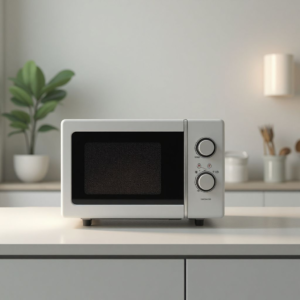 I know microwaves get a bad reputation among cooking enthusiasts, but hear me out. A quality compact microwave serves as a genuinely versatile cooking tool.
I use mine for steaming vegetables in silicone containers, making quick mug cakes, softening butter for baking, and even cooking bacon on a microwave-safe rack.
The reheating function gets the most use, sure, but the other capabilities matter.
The key is selecting one with inverter technology as opposed to traditional cycling power. Inverter models deliver consistent power levels, meaning your food cooks more evenly instead of alternating between blasting heat and no heat.
This makes a real difference when you’re defrosting meat or reheating leftovers.
When choosing a microwave for tight spaces, prioritize models with a smaller footprint but adequate interior capacity. A 0.9 cubic foot model typically measures about 19-21 inches wide externally but provides enough room for a standard dinner plate.
Some newer compact models also include convection capabilities, essentially giving you a second oven.
I’ve baked whole chickens in mine, and they come out surprisingly well.
Portable Induction Cooktop
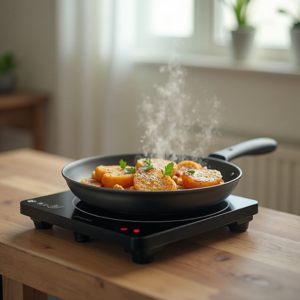 This is where small-apartment cooking gets really interesting. Portable induction burners changed everything for me when I lived in a place with only two functioning stove burners.
Induction technology heats incredibly fast, offers precise temperature control, and stays cool to the touch.
That last feature matters more than you might think when you’re working in cramped quarters where accidental burns are a constant risk.
A quality single-burner induction unit runs between 1800-2000 watts and costs anywhere from sixty to two hundred dollars. Double-burner models occupy more space but give you flexibility for cooking many dishes simultaneously.
The efficiency here is remarkable.
Induction transfers about 85-90% of energy directly to your cookware, compared to roughly 65% for traditional electric coils and 40% for gas. That means faster cooking times and lower electricity bills, both of which matter in a small space.
One challenge you need to know about upfront is that induction needs magnetic cookware. If your existing pots and pans don’t stick to a magnet, they won’t work.
I learned this the hard way when I excitedly bought my first induction burner, brought it home, and uncovered that exactly none of my cookware was compatible.
Budget accordingly for a decent induction-compatible pan set if needed.
Countertop Oven with Air Fryer Function
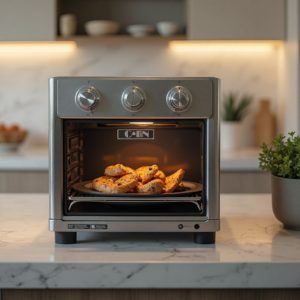 This appliance category has exploded in recent years, and for good reason. A quality countertop oven eliminates the need for a full-sized oven entirely, which turns out to be quite liberating in a small space.
Modern units typically measure between 12-18 inches wide and offer baking, broiling, toasting, and convection cooking.
Air fryer functionality adds another dimension that I’ve come to rely on. The rapid air circulation creates crispy textures without deep frying, and I’ve found it’s perfect for cooking proteins quickly.
I regularly roast whole chickens, bake cookies, make pizza, and crisp up vegetables in mine.
The results are consistently good, and the small size means everything cooks faster than in a full oven.
The preheat time difference matters more than you might expect. A full oven takes 15-20 minutes to preheat, while a countertop unit takes 3-5 minutes.
That might not sound significant, but it genuinely changes your cooking patterns.
You’ll find yourself baking and roasting more often because the barrier to entry drops substantially. When I know I can have the oven ready in three minutes, I’m much more likely to actually use it for a quick weeknight meal.
Multi-Functional Champions
Beyond the core three, several appliances deliver exceptional versatility relative to their footprint. These are the workhorses that really maximize what’s possible in a compact kitchen.
Electric Pressure Cooker
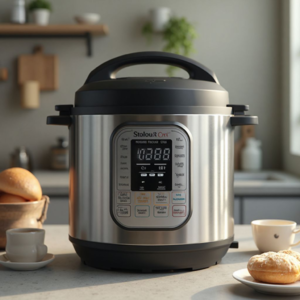 I resisted getting an Instant Pot for years because it seemed like a trendy gadget that would end up collecting dust. I was completely wrong about this.
The thing has genuinely transformed my cooking routine in ways I didn’t anticipate.
The 6-quart model measures about 13 inches in diameter and 12 inches tall, roughly the same footprint as a large stockpot, but it replaces a pressure cooker, slow cooker, rice cooker, yogurt maker, steamer, and warming pot. That’s six appliances in one, which means you’re saving enormous amounts of cabinet space.
The pressure cooking function is where the magic really happens. I can cook dried beans in 25 minutes without presoaking, make fall-off-the-bone short ribs in 45 minutes, or prepare steel-cut oats in 10 minutes.
For someone working with limited time and space, this efficiency is genuinely invaluable.
The slow cooker function means I can start dinner before work and come home to a finished meal, all without dedicating separate counter or cabinet space to a standalone slow cooker.
Learning curve-wise, expect to spend a few weeks getting comfortable with pressure cooking times and liquid requirements. I definitely overcooked some early batches of chicken, turning them into something resembling chicken-flavored cotton.
But once you understand the principles, it becomes second nature.
The time investment pays off quickly.
Immersion Blender with Attachments
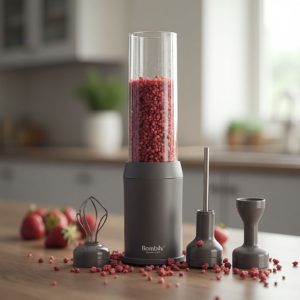 An immersion blender, sometimes called a stick blender, occupies about as much space as a wine bottle but handles an impressive range of tasks. The basic blending function works beautifully for pureeing soups directly in the pot, making smoothies in a tall container, and blending sauces.
You don’t need to transfer hot soup to a regular blender, which saves time and reduces the chance of burns.
Where this really shines is with attachment options. My immersion blender came with a whisk attachment that I use for whipping cream and beating eggs, plus a mini food processor bowl perfect for chopping onions, making pesto, or grinding nuts.
These three functions would normally need three separate large appliances occupying maybe 400 square inches of combined space.
My immersion blender setup takes up about 30 square inches.
The key is investing in a quality model with adequate power. Aim for at least 200 watts, and preferably closer to 300 watts if you can afford it.
Underpowered models struggle with tougher ingredients and burn out quickly.
I went through two cheap ones before buying a mid-range model that’s lasted five years and counting. The extra forty dollars I spent upfront has saved me money in the long run.
Temperature-Controlled Electric Kettle
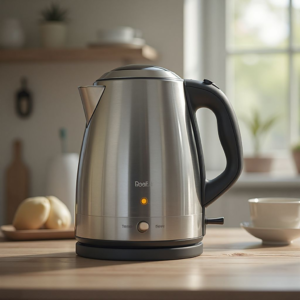 This might seem less essential than other appliances, but an electric kettle has become one of my most-used items. Beyond making tea and coffee, I use it constantly for jump-starting pasta water.
Boiling water in the kettle first, then transferring to a pot cuts stovetop time by about 60%.
I also use it for preparing instant grains, blanching vegetables, and even filling hot water bottles in winter.
Temperature-controlled models let you heat water to specific temperatures, which matters more than you might think. Different tea types need different temperatures for optimal flavor.
Green tea at boiling temperature tastes bitter and astringent.
At 175°F it’s smooth and pleasant. Pour-over coffee extracts best at 200°F.
Dissolving gelatin works better at specific temperatures.
The precision might sound excessive, but it genuinely improves results.
From a space perspective, electric kettles heat water significantly faster than stovetop kettles while occupying minimal counter space. Mine is about six inches in diameter, less than a single stovetop burner, and lives on my counter permanently because I use it many times daily.
The convenience factor is high enough that it justifies the permanent counter space.
Strategic Selection for Specific Cooking Styles
Beyond the universally useful appliances, your specific cooking style should guide extra selections. I’ve identified several categories worth considering based on how you actually cook as opposed to how you think you might cook someday.
Coffee Equipment
If you’re serious about coffee, a single-serve maker or compact espresso machine might justify its footprint. I spent years using a full-sized drip coffee maker that dominated my counter despite making coffee only once a day.
Switching to a compact single-serve machine freed up 150 square inches while actually improving my coffee quality through better temperature control and consistency.
Models like the AeroPress occupy almost no space and make excellent coffee with minimal cleanup. Compact espresso machines can fit under cabinets with as little as eight inches of clearance.
Pour-over setups need only a dripper and your electric kettle, which you already own.
The point is matching your coffee equipment to your actual consumption patterns as opposed to aspirational ones.
Rice Cookers and Hot Pots
A compact rice cooker becomes essential if you regularly prepare rice-based meals. Modern rice cookers do much more than cook rice.
I use mine for steaming dumplings, making congee, cooking quinoa, and even baking cakes.
The 3-cup models measure about eight inches square and produce enough rice for two to three people. Some advanced models include induction heating and pressure cooking capabilities, essentially functioning as specialized versions of the Instant Pot.
Electric hot pots, popular in Asian cuisines, provide another option worth considering. These multi-functional cookers work for soups, stews, noodles, and hot pot meals.
The 1.5-liter models take up minimal space but offer surprising versatility for someone who regularly prepares broths and one-pot meals.
I’ve used mine for everything from ramen to shabu-shabu to simple chicken soup.
Precision Cooking Tools
Sous vide circulators have dropped dramatically in price and size over recent years. These precision cooking tools clip onto any pot and circulate temperature-controlled water for restaurant-quality results.
I was skeptical initially, thinking sous vide was too fussy for regular home cooking.
But cooking proteins sous vide delivers consistently perfect doneness that’s really hard to achieve through traditional methods. The device itself is about the size of a large flashlight and stores in a drawer when not in use.
Installation and Integration Strategies
Owning the right appliances is only half the equation. You need smart storage and workflow strategies to make everything function smoothly in a limited space.
Vertical Storage Solutions
Wall-mounted options dramatically expand usable space without requiring any permanent modifications to your apartment. I installed a stainless steel rod system on one wall that holds my most-used utensils, pot holders, and even my lightweight pans.
Magnetic knife strips keep cutting tools accessible without occupying drawer space.
These simple additions probably reclaimed 100 square inches of counter and drawer space, which makes a real difference when you’re working with limited area.
For the microwave specifically, under-cabinet mounting brackets lift it completely off the counter. This requires finding a mounting location with adequate clearance and access to an outlet, but the counter space you gain back is substantial.
I mounted mine beneath a cabinet near the stove, creating a nice workflow for reheating components while cooking other dishes on the stovetop.
Mobile Storage Systems
Rolling carts provide flexible workspace that you can move as needed. I use a three-tier cart that holds my Instant Pot on the top shelf, immersion blender and attachments on the middle shelf, and mixing bowls on the bottom. When I’m cooking, I roll it adjacent to my prep area for easy access to everything.
When I’m done, it rolls into a narrow gap beside the refrigerator where it stays completely out of the way.
This mobility means appliances stay accessible without permanently occupying prime real estate. The cart cost about sixty dollars and has probably doubled my effective workspace by making previously dead space functional.
Hidden Storage Options
Appliance garages, those small cabinet cubbies with roll-up doors, keep items like toaster ovens accessible but hidden when not in use. If you’re in a rental situation, you obviously can’t change cabinetry, but if you own your place, these additions significantly improve functionality and aesthetics.
Pull-out shelving in lower cabinets changes how you access heavier appliances. I installed pull-out drawers in my base cabinets that hold my countertop oven and stand mixer.
Rather than wrestling these heavy items out of a dark cabinet, I simply pull out the shelf and everything’s immediately accessible at waist height.
This cost about eighty dollars for two shelves and took maybe thirty minutes to install, but the improvement in daily usability has been enormous.
Common Mistakes to Avoid
I’ve made plenty of errors in small-space kitchen management, and I’ve watched friends make similar mistakes. Here are the patterns I see repeatedly that you can avoid.
Buying Single-Purpose Gadgets
The appeal of specialized gadgets is real. Avocado slicers, banana slicers, quesadilla makers, hot dog cookers.
These single-purpose tools seem convenient in theory but create clutter without adding meaningful functionality.
A good knife handles avocados and bananas just fine. A pan makes quesadillas and hot dogs perfectly well.
Before buying any appliance, ask yourself honestly whether existing tools could accomplish the same task with minimal extra effort.
I once owned a sandwich maker, panini press, and waffle iron. Three separate appliances doing essentially the same thing, which is applying heat to both sides of food.
Consolidating to a single reversible grill and griddle freed up significant space without limiting my cooking options at all.
Ignoring Electrical Limitations
Small apartments often have limited electrical circuits, and overloading them causes breakers to trip. High-wattage appliances like microwaves, toaster ovens, and electric kettles can easily overload a circuit when running simultaneously.
I learned this lesson when I started my microwave while my toaster oven was preheating and plunged my entire kitchen into darkness.
Map out which outlets connect to which circuits, and avoid running many high-draw appliances on the same circuit simultaneously. This might mean using your electric kettle on a different outlet than your toaster oven, even if it’s slightly less convenient.
The minor inconvenience beats constantly resetting breakers.
Neglecting Ventilation
Cooking in tight quarters generates substantial heat, steam, and odors. Without adequate ventilation, you’ll deal with condensation on windows, lingering food smells, and uncomfortable temperatures that make your whole apartment feel like a sauna after making dinner.
If your apartment lacks a range hood, a portable air purifier with a carbon filter helps significantly. I run mine during and after cooking to capture airborne particles and odors.
Opening windows provides obvious benefits, but many apartments have limited or poorly positioned windows.
In these situations, a small fan positioned to create cross-ventilation makes a substantial difference. The goal is creating airflow that carries cooking byproducts out as opposed to letting them saturate your living space.
Delaying Cleaning
Compact appliances often have more nooks and crannies than full-sized versions, making them harder to clean thoroughly if you let things build up. Those air fryer baskets with tiny perforations turn into absolute nightmares to clean if you let residue bake on.
Immersion blender blades need careful handling to avoid cuts while cleaning.
The solution is cleaning immediately after use, before residue hardens. I keep a dedicated cleaning brush for my air fryer basket and wash my immersion blender by running it in a container of soapy water immediately after use.
These small habits prevent the buildup that makes cleaning genuinely difficult and time-consuming later.
Frequently Asked Questions
What appliances do I really need for a small apartment kitchen?
The three essentials are a compact microwave, portable induction cooktop, and countertop oven with air fryer function. These cover approximately 90% of basic cooking needs while occupying minimal space.
Beyond these, add appliances based on your actual cooking habits as opposed to what you think you might use someday.
How much counter space does an Instant Pot need?
A 6-quart Instant Pot requires about 13 inches of diameter and 12 inches of height. You’ll want an extra 6-8 inches of clearance above for steam release.
The footprint is roughly equivalent to a large stockpot, but it replaces six separate appliances, making it a worthwhile trade-off for most small kitchens.
Can induction cooktops work with all cookware?
Induction cooktops only work with magnetic cookware. To test if your existing pots and pans are compatible, hold a magnet to the bottom.
If it sticks firmly, the cookware will work with induction.
Stainless steel and cast iron typically work well, while aluminum and copper usually don’t unless they have a magnetic base layer.
Are countertop ovens energy effective?
Countertop ovens use 40-60% less energy than full-sized ovens because they heat a smaller space and preheat much faster. A typical countertop oven uses between 1200-1800 watts compared to 2400-4000 watts for a standard oven.
The energy savings add up significantly if you use it regularly instead of your main oven.
How do I maximize storage in a small kitchen?
Use vertical storage through wall-mounted racks and magnetic strips. Install pull-out shelving in base cabinets for easier access to heavy appliances.
Consider rolling carts for mobile storage that can be moved out of the way when not needed. Store appliances you use less often in higher cabinets or under the bed if necessary.
What size air fryer is best for two people?
A 3-4 quart air fryer or a countertop oven with air fryer function works well for two people. This size handles two chicken breasts, four to six servings of vegetables, or a small batch of french fries comfortably.
Larger sizes take up more counter space without providing meaningful benefits for small households.
Is an immersion blender better than a regular blender for small spaces?
An immersion blender with attachments typically offers better space efficiency. It occupies about as much space as a wine bottle but handles blending, whisking, and food processing with the right attachments.
Regular blenders are better for very large batches or crushing ice, but for most daily tasks, an immersion blender works perfectly well.
Key Takeaways
Small apartment kitchens demand strategic thinking but absolutely don’t need sacrificing cooking quality or variety. The foundation starts with three core appliances: a compact microwave, portable induction cooktop, and countertop oven or air fryer combination unit.
These cover the large majority of cooking tasks in minimal space.
Multi-functional appliances like the Instant Pot, immersion blender, and temperature-controlled electric kettle deliver exceptional value by replacing many single-purpose tools. Each item you add should justify its footprint through either versatility or essential specialized function that nothing else can copy.
Strategic storage through vertical mounting, rolling carts, and pull-out shelving keeps appliances accessible without permanently occupying counter space. The workflow matters as much as the equipment itself.
Position items based on how you actually cook as opposed to arbitrary organization schemes.
Avoid redundant single-function gadgets, electrical circuit overloading, inadequate ventilation, and delayed cleaning. Small mistakes in tight quarters create problems that feel much larger than they would in a spacious kitchen.
Let your actual cooking patterns as opposed to aspirational habits guide appliance purchases. Audit ruthlessly, test choices before buying, and give yourself permission to change your setup as your needs evolve.
The constraints of small-space cooking ultimately build skills and creativity that enhance your cooking regardless of kitchen size.