

 Standing in an electronics store staring at walls of audio gear, or scrolling endlessly through product listings trying to decide between sleek over-ear headphones or wireless earbuds, you’re definitely not alone. This decision has become one of the most common tech choices we face, right up there with picking a smartphone or laptop.
So what’s the real difference between headphones and earbuds, and which one should you actually use?
The answer depends entirely on how you live, where you listen, what you’re listening to, and honestly, what your ears can tolerate. You’ve got about 60 days from the moment you start researching before decision fatigue sets in and you just buy whatever’s on sale.
Taking a more thoughtful approach means understanding what each type really offers, and that’s exactly what I’ll walk you through here.
Understanding the Core Differences
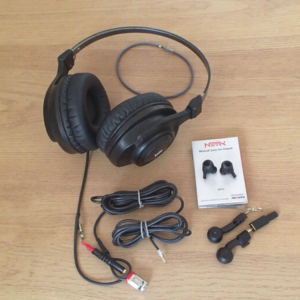
The whole headphones versus earbuds conversation breaks down into where the sound enters your body and how it gets there. Over-ear headphones have large cups that completely surround your ears, creating a little acoustic chamber around each side of your head.
On-ear models sit directly on your outer ear, applying some pressure to keep them in place.
Traditional earbuds rest at the entrance of your ear canal without really sealing it, while in-ear headphones (often called IEMs or in-ear watches) actually insert into the canal with silicone or foam tips that create a seal.
Each design fundamentally changes the physics of how sound reaches your eardrum. Over-ears have bigger drivers, usually somewhere between 40 and 60 millimeters, which can move more air and typically handle bass frequencies with less distortion.
They also interact with your outer ear (the pinna) in ways that affect how you perceive space and direction in the sound.
In-ears bypass most of that outer ear interaction, but because they’re so close to your eardrum and seal out external noise, they can deliver incredibly detailed sound even with tiny drivers. The physics here are actually fascinating, when you create that seal in your ear canal, you eliminate acoustic leakage that would normally rob you of bass frequencies.
This means even a 6mm driver in a good IEM can produce shockingly powerful low-end response.
The comfort equation is wildly personal. I’ve met people who can wear over-ears for eight-hour work sessions without thinking about it, and others who get headaches after 30 minutes from the clamping force.
Similarly, some people find in-ears completely disappear once they’re inserted, while others experience immediate itchiness or that “plugged ear” sensation that drives them nuts.
There’s no universal answer here, which makes trying before buying really valuable when possible.
Sound Quality Fundamentals
Here’s something that surprises a lot of people: the category itself doesn’t decide sound quality. A well-engineered pair of in-ear monitors can absolutely sound more accurate and detailed than a mediocre pair of over-ear headphones that cost twice as much.
The tuning, how the manufacturer has adjusted the frequency response, matters far more than whether you’re dealing with giant drivers or tiny ones.
That said, the form factor does nudge certain characteristics. Over-ears, especially open-back models, tend to create a more spacious, speaker-like presentation.
The soundstage (that sense of instruments being positioned in three-dimensional space around you) is often wider and more natural with good over-ears.
When you’re listening to a well-recorded jazz album or an orchestral piece, over-ears can make you feel like you’re sitting in the venue as opposed to having music piped directly into your skull.
Closed-back over-ears sacrifice some of that openness but give you strong isolation from outside noise and prevent sound from leaking out to annoy people around you. This makes them better for commuting or shared spaces where you don’t want your music broadcasting to everyone within five feet.
In-ears excel at detail and intimacy. Because they’re sealed in your ear canal and positioned so close to your eardrum, they can reveal tiny nuances in recordings that might get lost with other designs.
Multi-driver IEMs, which use several tiny speakers to handle different frequency ranges, can achieve incredible precision.
You’ll hear the subtle breath sounds between a vocalist’s phrases, the gentle scrape of fingers moving on guitar strings, or the delicate decay of a cymbal crash that would blend into the background with lesser gear.
The bass response can be really impressive too, despite the small size, precisely because that seal means no low frequencies escape. Traditional open-fit earbuds, the kind that came with every iPod and still ship with some phones, typically struggle the most.
Without a seal, they leak sound in both directions and have a really hard time producing satisfying bass.
They often sound thin or mid-focused unless you’re in a perfectly quiet room.
The Bluetooth codec conversation deserves a mention here. SBC is the baseline that everything supports, AAC works well on Apple devices, and codecs like aptX, aptX HD, and LDAC can deliver better quality at higher bitrates if both your source device and your headphones support them.
For most everyday listening in normal environments, honestly, the difference is subtle compared to fit and tuning.
But if you’re really into audio quality and have the gear to support it, those higher-end codecs can make a noticeable difference, particularly in busy passages with lots of instruments playing simultaneously.
Comfort and Long-Term Wearability
Over-ears distribute pressure across a larger area, the headband across your skull and the pads around (not on) your ears. When this works well, it’s often the most comfortable option for multi-hour sessions.
You’re not putting anything inside your body, and the weight is spread out.
A good pair of over-ears with well-designed padding can genuinely feel like they’re barely there after the first few minutes.
But over-ears bring their own problems. Heat buildup is real, especially with leather or synthetic leather earpads.
After an hour or two, your ears can feel sweaty and gross, particularly in warm weather or if you’re doing anything even slightly active.
If the clamping force (how tightly the headband squeezes) is too strong, you might develop pressure headaches or sore spots on the sides of your head.
Glasses wearers often struggle because the arms of their glasses get pressed into their skull where they meet the earpads. Some manufacturers have started designing earpads with channels specifically for glasses arms, which helps, but it remains a common complaint.
And if you’ve got a larger or smaller head than average, finding over-ears that fit properly can be frustrating.
The adjustment mechanism might max out before you get a comfortable fit, or conversely, even at the tightest setting they might slide around loosely.
On-ear headphones are more compact and portable, but they concentrate all their pressure directly on your outer ear. After a couple of hours, many people report soreness on the cartilage of the pinna.
They’re sort of the middle child of the headphone family, not as immersive as over-ears, not as portable as earbuds, and often not as comfortable as either extreme.
There are exceptions, particularly in the premium category, but on-ears generally occupy an awkward middle ground.
Earbuds and in-ears are incredibly compact and can genuinely feel like they disappear once you’ve got the right fit. But that “right fit” part is crucial and surprisingly difficult to achieve.
In-ears typically come with multiple tip sizes, and choosing the wrong one ruins everything, sound quality drops, they fall out constantly, or they cause physical discomfort.
Some people experience canal soreness, itchiness, or that plugged feeling that makes them hyper-aware of their own heartbeat and breathing. Micro-movements while walking, chewing, or talking can cause friction inside the ear canal, and with wired in-ears, cable noise (the sound of the wire rubbing against your clothes) can be really annoying.
Deep-insertion tips that go far into the canal provide the best seal and isolation but can create pressure sensations when you insert or remove them that some people find uncomfortable or even slightly painful.
Hearing Safety and Volume
The question everyone really wants answered: which type is safer for your hearing? The honest answer is that it depends entirely on how you use them, not which category they fall into.
Your hearing is at risk when you expose it to loud sounds for extended periods. The general safe threshold is around 70 decibels for unlimited duration.
Normal conversation sits at about 60 dB.
Once you get above 70 dB, the safe exposure time starts dropping. At 85 dB, about as loud as heavy traffic or a busy restaurant, you can listen safely for roughly eight hours.
But at 100 dB, you’ve got maybe 15 minutes before you’re risking permanent damage.
Most smartphones and music players can push 100 to 110 dB through headphones or earbuds at maximum volume. That’s genuinely dangerous.
The problem is that people regularly listen at 80 to 90 dB, often without realizing it, because they’re trying to overcome background noise in their environment.
Here’s the counter-intuitive part: in-ear headphones with a good seal can actually be safer than loose-fitting earbuds or on-ear headphones in noisy environments. Because they isolate so well, you don’t need to crank the volume to overcome subway noise, gym music, or street sounds.
With poor isolation, you naturally turn things up to compensate, and that’s where the damage happens.
Active noise cancelling reinforces this advantage. Whether in over-ears or earbuds, ANC reduces the ambient sound level reaching your ears, which means you can listen at lower absolute volumes and still enjoy your music.
Studies have shown that people with good ANC headphones in noisy environments choose listening levels several decibels lower than people with non-isolating gear in the same environment.
Over time, those few decibels make a substantial difference in cumulative noise exposure.
The proximity to the eardrum argument, that earbuds are dangerous because they’re so close, is mostly a myth. What matters is the actual sound pressure level reaching your cochlea.
An earbud at moderate volume is far safer than an over-ear headphone at high volume, even though the over-ear is physically farther away.
The distance difference of a few centimeters makes almost no practical difference in terms of hearing damage risk.
Real-World Use Cases
If you’re commuting on public transportation, you’re dealing with sustained noise levels often in the 70 to 85 dB range. Using open-fit earbuds in this environment basically forces you to blast your music at potentially unsafe levels just to hear it.
ANC over-ears or sealed in-ears with good isolation make way more sense here.
You can actually hear your music clearly at 50 to 60 percent volume instead of maxing things out.
For office work or working from home, comfort becomes the priority because you might be wearing them for hours at a stretch. Over-ears with plush earpads and moderate clamping force tend to win here.
If you need to take calls, make sure the microphone quality is decent, many over-ears have mediocre mics, while surprisingly, many true wireless earbuds have really good microphone arrays with beamforming that isolate your voice well.
The visibility of over-ears also serves a social function in shared spaces: they signal to others that you’re focused and shouldn’t be interrupted, whereas tiny earbuds can be almost invisible, leading to awkward situations where people try to talk to you and you don’t notice.
Exercise and sports shift the equation entirely. Over-ears get sweaty, slip around, and feel ridiculous when you’re running or doing burpees.
In-ears with stability fins or hooks that anchor them in place are usually the best choice for vigorous movement.
Some people prefer open-fit designs or bone conduction headphones for outdoor running because they maintain awareness of traffic and surroundings, trading sound quality and isolation for safety.
Gaming demands low latency and positional audio. Over-ear gaming headsets with open-back or semi-open designs provide the widest soundstage, which helps you locate enemy footsteps or detect the direction of gunfire.
Wired connections still have the latency advantage for competitive play, though many newer wireless systems have gotten close enough for most people.
Some gamers actually prefer in-ears for their isolation and lighter weight during long sessions, especially if they’re tuned with emphasized mids where footsteps and dialogue sit.
For air travel and long flights, high-quality ANC over-ears stay the gold standard. The steady drone of airplane engines is exactly what ANC excels at cancelling.
You can listen to music or podcasts at comfortable volumes, or even use them with nothing playing just for the silence.
ANC in-ears work too and pack much smaller, but many people find that over-ears win on comfort during a six-hour flight.
Ear Health Considerations
Beyond hearing damage from volume, there are other health considerations that don’t get talked about enough. In-ears and earbuds can push earwax deeper into your ear canal as opposed to allowing it to naturally migrate outward.
Over time, this can lead to wax buildup, blockages, and temporary hearing loss that needs a doctor to clear out.
If you use in-ears regularly, being mindful of ear hygiene and potentially getting your ears checked periodically makes sense.
Sharing earbuds or in-ears is legitimately gross from a hygiene standpoint. Ear canals harbor bacteria, and swapping earbuds can transfer those bacteria between people.
That’s one reason why over-ears, which don’t enter the body, feel less intimate and more shareable (though you still shouldn’t share them without cleaning).
Some people develop allergic reactions or skin irritation from the materials in eartips (usually silicone) or earpads (synthetic leather, certain foams). If you notice redness, itching, or irritation that continues, trying different materials, memory foam tips instead of silicone, or velour earpads instead of leather, might solve the problem.
There’s also something called the “eardrum suck” sensation that some people experience with ANC, particularly in-ears with strong noise cancelling. It feels like pressure or a slight vacuum in the ear that can be uncomfortable or even cause mild dizziness in sensitive people.
The effect comes from the way ANC works, generating inverse sound waves that can create subtle pressure changes.
It’s not dangerous, but it’s unpleasant enough that some people can’t tolerate certain ANC implementations.
Technical Specs Worth Understanding
When you’re shopping, you’ll see specs thrown around that range from genuinely important to marketing nonsense. Driver size in over-ears does matter to some extent, larger drivers can move more air and typically handle bass with less distortion, but a poorly tuned 50mm driver sounds worse than a well-tuned 40mm driver.
Don’t choose based on driver size alone.
Impedance and sensitivity matter mainly if you’re using wired headphones with various sources. High-impedance headphones (above 100 ohms) might need a dedicated headphone amplifier to reach adequate volume and sound their best.
Low-impedance models (16 to 32 ohms) work fine straight from phones and laptops.
For wireless gear, this is all handled internally and you don’t need to think about it.
Frequency response specs are mostly marketing. Every manufacturer claims “20Hz to 20kHz” which is the theoretical range of human hearing, but that doesn’t tell you anything about how those frequencies are balanced or how much distortion exists.
Professional reviews with measurements are more useful than spec sheets.
Battery life is straightforward and matters a lot for wireless gear. Over-ears typically offer 20 to 40 hours of playback per charge, sometimes more.
True wireless earbuds usually give you 5 to 8 hours per charge in the buds themselves, but the charging case provides multiple extra charges, bringing total usable time to 20 to 30 hours before you need to find a USB cable.
If you forget to charge things regularly, over-ears with their longer single-charge runtime might save you from frustration.
Environmental and Economic Reality
Here’s an uncomfortable truth: true wireless earbuds are kind of an environmental disaster. The batteries are sealed inside tiny plastic shells, and when those batteries degrade after a few years, the entire unit often becomes e-waste.
You can’t replace the battery, and the cost of professional repair exceeds buying new ones.
Some manufacturers offer person earbud replacement if you lose one, but it’s expensive and doesn’t address the battery degradation issue.
Over-ear headphones, especially mid-range to high-end models, tend to be far more repairable and longer-lasting. You can replace earpads, swap cables, and some even have replaceable headbands.
A solid pair of wired over-ears can genuinely last a decade or more if you take care of them.
This makes them a better long-term value despite often higher upfront costs.
From a pure cost-per-year-of-use perspective, buying one good pair of over-ears for $200 that lasts eight years is cheaper than buying $80 wireless earbuds every two years. Plus you’re not contributing to as much electronic waste.
If sustainability matters to you at all, this calculation should factor into your decision.
Making Your Decision
The smartest approach, if budget allows, is honestly to have both. A good pair of over-ears for home and office use, and a decent set of wireless earbuds for portability, exercise, and situations where you need something truly pocketable.
This matches the tool to the task as opposed to forcing one solution to work everywhere.
If you can only choose one, think hard about where you’ll actually use them most. If 80 percent of your listening happens during your commute and at the gym, earbuds make more sense despite over-ears potentially sounding better.
If you’re mostly at home or in an office, over-ears probably win on comfort and sound quality.
Consider the social context too. Some workplaces have informal norms about headphone types.
Visible over-ears might be seen as more acceptable in some offices because they clearly signal you’re in focus mode, while constantly having tiny earbuds in might be perceived as antisocial or inattentive, even if you’re using transparency mode to stay aware.
For kids and teenagers, volume-limited over-ears are almost always the better choice. Many models for children have hard limits at 85 dB, and the larger form factor makes it easier for parents to notice when kids are using them.
Handing a teenager adult wireless earbuds without any education about safe listening is genuinely risky, as they’re likely to crank the volume up in noisy environments without understanding the long-term consequences.
People Also Asked
Do over-ear headphones cause hair loss?
Over-ear headphones don’t cause permanent hair loss. The pressure from the headband can temporarily flatten your hair or create indentations, which people sometimes call “headphone hair,” but this doesn’t damage hair follicles.
If you’re experiencing actual hair thinning where your headphones sit, you should see a doctor because that’s likely unrelated to headphone use.
Can you sleep with earbuds in?
You can technically sleep with earbuds in, but it comes with risks. The pressure from your pillow can push earbuds deeper into your ear canal, potentially causing pain or damage.
Sleep-specific headphones with flat speakers that sit in a headband are safer for side sleepers.
If you do use earbuds for sleep, choose ones with low profile designs and keep volume very low.
How do you clean ear wax out of earbuds?
Remove silicone tips from the earbuds and wash them with mild soap and warm water, then dry completely before reattaching. For the earbud itself, use a dry soft brush or toothpick to gently remove visible wax from the mesh screen, being careful not to push debris further into the driver.
Isopropyl alcohol on a cotton swab works for sanitizing plastic surfaces.
Never submerge the electronic parts in water.
Which headphones are best for protecting hearing?
Headphones with active noise cancelling or good passive isolation protect hearing best because they let you listen at lower volumes in noisy environments. Volume-limiting headphones designed for children cap output at 85 dB, which prevents dangerous exposure levels.
No headphone protects your hearing if you blast them at maximum volume, your listening habits matter more than the hardware.
Do bone conduction headphones work for people with hearing loss?
Bone conduction headphones can help people with conductive hearing loss (problems with the ear canal or middle ear) by bypassing those structures and sending vibrations directly to the inner ear. They don’t help with sensorineural hearing loss (damage to the inner ear or auditory nerve), which is the most common type.
Anyone with hearing loss should ask an audiologist before assuming bone conduction will work for them.
How long do wireless earbud batteries last before they die?
Lithium-ion batteries in wireless earbuds typically last 2 to 3 years of regular use before they degrade noticeably. You’ll notice shorter playback times between charges as the batteries age.
Since most wireless earbuds have sealed batteries you can’t replace, this essentially defines the lifespan of the product.
Heavy daily use accelerates degradation, while occasional use extends battery life.
Are noise-cancelling headphones safe for daily use?
Noise-cancelling headphones are safe for daily use and can actually protect your hearing by reducing the need for high volumes. The “eardrum suck” sensation some people feel is harmless, though uncomfortable for sensitive people.
There’s no evidence that the anti-noise technology itself causes hearing damage.
The main risks come from volume levels and wearing them so long you’re unaware of your environment in unsafe situations.
What’s the difference between open-back and closed-back headphones?
Open-back headphones have perforated ear cups that let air and sound pass through, creating a more natural, spacious sound but allowing noise to leak in and out. Closed-back headphones seal completely, isolating you from external noise and preventing sound leakage, but can sound more “in your head” and trap heat around your ears.
Open-back models work best in quiet spaces, while closed-back suits noisy environments or shared spaces.
Key Takeaways
Form factor doesn’t decide sound quality, tuning and engineering matter far more than whether you choose headphones or earbuds.
Better isolation, whether from in-ears or ANC over-ears, typically leads to safer listening because you don’t need to blast volume to overcome environmental noise.
Comfort is wildly personal and depends on your head shape, ear shape, and person sensitivity, what works perfectly for someone else might be torture for you.
Over-ears generally win for long listening sessions at home or office, while in-ears and earbuds win for portability and situations where you’re moving around.
True wireless earbuds are convenient but environmentally problematic and have shorter lifespans because of sealed batteries.
If you can manage it, owning both types and using each in suitable contexts gives you the best of both worlds.
Your actual use patterns matter more than theoretical ideals, improve for how you really live, not how you imagine you might listen to music.