

Low Impact Workout for Seniors
 You might think that aging means slowing down, accepting stiffness, and resigning yourself to watching life from the sidelines. The reality could not be more different.
Walk into any modern fitness center and you’ll see something remarkable: 70-year-olds building muscle, 80-year-olds improving their balance, and entire groups of seniors moving with an energy that defies every outdated assumption about what aging bodies can do. The secret isn’t some breakthrough supplement or expensive equipment.
Low-impact exercise is quietly transforming how we think about fitness in our later years.
Understanding What Low-Impact Really Means
Low-impact doesn’t mean low-effort or easy. What it actually means is that you’re keeping one foot on the ground at all times, eliminating the jarring forces that come with jumping or running.
When you run, each footstrike creates impact forces reaching two to three times your body weight. That’s a tremendous amount of stress on joints that might already be dealing with arthritis or decades of wear and tear.
Low-impact activities distribute these forces smoothly across your joints instead of concentrating them in sudden, jarring bursts. Walking, cycling, swimming, tai chi, these movements let you work just as hard cardiovascularly without the mechanical damage.
Your heart doesn’t know the difference between impact and no impact.
It only knows effort, and it responds accordingly.
The physiological mechanisms here are really fascinating. When you engage in sustained low-impact movement, you’re stimulating aerobic adaptation, building mitochondrial density, and improving oxygen utilization throughout your entire body.
Your cardiovascular system responds to the challenge regardless of whether your feet are pounding pavement or gliding through water.
The musculoskeletal benefits extend beyond just protecting cartilage and bone. Low-impact movements allow for higher training volumes without triggering the inflammatory cascade that high-impact activities produce.
You can exercise more frequently, recover faster, and accumulate more total training time over weeks and months.
This consistency is what drives real adaptation.
Think of it this way: you can walk briskly for 30 minutes six days a week without significant joint stress. Try running that same schedule and most people over 65 will develop overuse injuries within a month.
The added training effect of the walking schedule far exceeds the running schedule simply because sustainability matters more than intensity.
Why Traditional Exercise Fails Older Adults
Here’s something that took the medical community far too long to figure out: prescribing the same high-impact routines to 70-year-olds that work for 30-year-olds isn’t just ineffective, it’s actually counterproductive. Throughout the 1980s and early 1990s, fitness professionals largely ignored the specific needs of aging bodies.
The prevailing wisdom suggested that seniors should rest, preserve their joints, and avoid strenuous activity.
The shift happened in the early 2000s when longevity research started demonstrating something crucial: inactivity speeds up decline faster than aging itself does. Suddenly, the focus changed from telling seniors to rest to encouraging carefully structured movement that actually protects joints while building strength.
What changed was our understanding of sarcopenia, the age-related muscle loss that affects roughly one in four seniors. We learned that sitting still doesn’t preserve muscle, it destroys it at an alarming rate.
The body operates on a use-it-or-lose-it principle that becomes even more pronounced after 65.
After age 50, sedentary adults lose approximately 3% of their muscle mass per decade, and that rate speeds up significantly after 70.
But we also learned that the wrong kind of activity, high-impact, poorly structured workouts, caused overuse injuries that discouraged people from continuing. Someone attempting to jump back into jogging after decades of inactivity almost inevitably develops knee pain, shin splints, or plantar fasciitis.
They stop exercising entirely, assuming their body just can’t handle it anymore.
Low-impact training solved this problem by providing enough stimulus for adaptation without the structural damage that comes from repetitive pounding. The sweet spot exists right there, enough challenge to trigger strength gains and cardiovascular improvement without the inflammatory damage that derails progress.
Traditional high-impact programs also fail older adults because they don’t address the primary concerns that matter most for maintaining independence. The ability to sprint or jump rarely determines quality of life at 70.
The ability to get up from a chair, climb stairs without breathlessness, carry groceries, and recover balance when you stumble, these functional capacities matter enormously, and low-impact training addresses them directly.
The Energy Paradox
One of the most counterintuitive discoveries about senior fitness is this: moderate exercise gives you more energy than it takes. I know it sounds backwards.
You’d think that expending energy through movement would leave you depleted, but the opposite happens consistently.
The mechanism involves your mitochondria, those cellular powerhouses responsible for producing ATP, your body’s energy currency. Regular movement stimulates mitochondrial function and actually increases the number of mitochondria in your cells.
More powerhouses mean more energy production capacity.
This explains why sedentary seniors consistently report feeling sluggish while active ones describe enhanced vitality that carries through their entire day.
Research has documented this effect repeatedly in controlled studies. Participants beginning low-impact exercise programs typically report increased daily energy within two to three weeks, well before they see significant fitness improvements measured by objective metrics.
The neurological adaptation happens faster than the muscular one.
Your nervous system becomes more effective at recruiting muscle fibers, your mitochondria start functioning better, and suddenly tasks that felt exhausting become manageable.
The energy boost extends beyond just physical stamina. Many people report improved mental clarity, better focus, and enhanced mood.
The combination of increased blood flow to the brain, endorphin release, and improved sleep quality creates a cascade of cognitive benefits that make the entire day feel easier.
This creates a positive feedback loop. You exercise, which gives you more energy, which makes you more likely to stay active throughout the day, which improves your sleep, which gives you more energy for your next workout.
The cycle builds on itself week after week.
Water-Based Training as the Ultimate Joint Protector
Water aerobics and swimming represent perhaps the most joint-friendly options available. When you’re submerged to chest level, buoyancy reduces gravitational loading on your joints by 50 to 90 percent.
You’re essentially exercising in a reduced-gravity environment where your actual body weight pressing down on your knees, hips, and spine drops dramatically.
But water provides more than just cushioning. It creates resistance in all directions, 12 to 15 times more resistance than air.
Every movement through water becomes a strength exercise without requiring any equipment.
Push your arm forward and you’re working your chest and triceps against significant resistance. Pull it back and you’re engaging your back and biceps.
Lift your leg and you’re fighting resistance the entire way up and down.
The fluid resistance creates constant tension throughout the full range of motion. There’s no “easy” part of the movement where you’re just moving through air.
This constant loading builds strength more evenly than land-based exercises where gravity only provides resistance in one direction.
What makes water training especially valuable is the sensory feedback. The pressure of water against your skin provides proprioceptive input that helps rebuild body awareness.
Many seniors lose this spatial awareness through years of sedentary living, and water seems to speed up its return.
The tactile feedback from water pressure helps your brain reestablish accurate maps of where your limbs are positioned.
The temperature regulation matters too. Water conducts heat away from your body much more efficiently than air, preventing overheating during exercise.
Many older adults struggle with heat regulation, and the cooling effect of water allows them to work harder and longer than they could on land.
The social component matters tremendously. Water aerobics classes create communities where people form genuine friendships.
Research has actually documented that class attendance correlates with expanded social networks, and those friendship connections independently improve longevity beyond the exercise benefits themselves.
Tai Chi’s Hidden Neurological Benefits
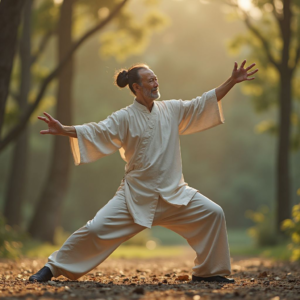
Most people know tai chi improves balance. What they don’t realize is that it’s actually rewiring your nervous system in ways that extend far beyond preventing falls.
A 2021 systematic review documented something remarkable: regular tai chi practitioners in their 70s demonstrated faster reaction times than sedentary people in their 40s. The flowing movements requiring constant subtle weight transfers engage muscle groups in coordinated patterns that simply can’t be replicated through traditional strength training machines.
But the neurological benefits go much deeper. Each tai chi movement demands precise attention to body positioning, weight distribution, and spatial orientation.
You’re essentially performing dual-task training, physical movement combined with intense cognitive focus.
This combination stimulates neuroplasticity, the brain’s ability to form new neural connections throughout life.
The practice improves proprioception, your body’s sense of where it exists in space. This awareness naturally declines with age, contributing to that shuffling gait and tentative movement you see in many older adults.
Tai chi reverses this decline by constantly challenging your proprioceptive systems with movements that shift your center of gravity in controlled, deliberate ways.
The slow, controlled nature of the movements forces you to maintain balance through awkward positions as opposed to rushing through them with momentum. You build genuine stability as opposed to compensating with speed. This transfers directly to real-world situations where you need to catch yourself when you trip or adjust your balance on uneven ground.
The meditative aspect provides stress reduction benefits that cascade into better sleep, lower blood pressure, and reduced inflammation markers. The mind-body connection cultivated through regular practice helps people develop better awareness of tension patterns and physical sensations, often leading to earlier recognition of potential problems.
Seated Strength Training’s Unexpected Effectiveness
Here’s something that surprises people: seated exercises produce identical strength gains to standing versions when you apply proper resistance and maintain strict form. The assumption that you must stand to build meaningful strength is completely wrong and prevents many people from exercising at all.
Seated leg lifts isolate your quadriceps and hip flexors without requiring any balance. Seated torso rotations engage your obliques and core stabilizers.
Seated arm work with resistance bands or light weights builds upper body strength without any fall risk whatsoever.
The key is controlling the movement through its full range of motion and avoiding momentum. When you eliminate the balance component, you can actually focus more intensely on the targeted muscles.
Some participants build strength faster in seated positions precisely because they’re not distracted by stability concerns or fear of falling.
This matters tremendously for people with significant mobility limitations, severe balance issues, or conditions like Parkinson’s disease where standing exercise presents real challenges. The option to build strength while seated removes barriers that might otherwise prevent someone from exercising at all.
Seated exercises also allow for very precise loading. You can use adjustable resistance bands, progress through different weights systematically, and isolate muscle groups effectively.
The stability of the seated position means you can push closer to muscular fatigue safely without worrying about losing balance.
Chair-based workouts can be surprisingly comprehensive. You can work your shoulders with overhead presses, your back with rows, your chest with band presses, your legs with extensions and curls, and your core with seated twists and marches.
A finish full-body strength program can be executed entirely from a chair.
Dance as Cognitive Training Disguised as Cardio
Dance-based low-impact cardio does something that walking or cycling can’t, it forces your brain to coordinate rhythm, sequence movements, and make split-second decisions about foot placement and arm position. You’re essentially cross-training your brain and body simultaneously.
Following choreographed sequences activates your prefrontal cortex, the region responsible for planning and executive function. You’re building motor planning skills, working memory, and spatial reasoning while getting cardiovascular exercise.
The cognitive demands create a training effect that pure cardio alone doesn’t provide.
Research on dance and cognitive function in older adults shows measurable improvements in processing speed, attention, and memory after just 8 to 12 weeks of regular practice. The social interaction in group classes adds another cognitive layer as you mirror others, stay synchronized with the group, and build connections with classmates.
The beauty of dance-based workouts is that they don’t feel like exercise. The music and social atmosphere create intrinsic enjoyment that makes adherence much easier than grinding through repetitive movements on a stationary bike.
People actually look forward to their dance classes as opposed to dreading them.
Different dance styles offer different benefits. Latin-inspired routines tend to emphasize hip mobility and lower body strength.
Ballroom-style movements work on posture and partner coordination.
Line dancing builds memory and spatial awareness. The variety keeps your brain challenged and prevents adaptation.
Building a Practical Low-Impact Routine
A comprehensive low-impact workout typically runs 15 to 30 minutes and follows a specific structure. You’ll start with a three to five minute warm-up that gradually elevates your heart rate and takes your joints through gentle ranges of motion.
This preparation matters more as you age because your connective tissues need more time to become pliable and ready for work.
The cardio portion runs 10 to 15 minutes at moderate intensity. This might include step-touch patterns, marching with arm movements, side-stepping with lateral reaches, or hamstring curls bringing your feet toward your glutes.
The goal is sustaining an effort level where you can still hold a conversation but you’re definitely working hard enough to feel it.
Strength training follows, targeting major muscle groups through five to ten minutes of focused work. Wall push-ups, chair squats, seated leg lifts, and standing arm work with or without resistance bands build functional strength.
The emphasis should be on controlled movement through full ranges of motion as opposed to rushing through repetitions.
Balance and flexibility work occupies the final three to five minutes. Single-leg stands progressing from wall support to unsupported holds, heel-to-toe walking, and gentle stretches for major muscle groups round out the session.
The cool-down is really important. Your heart rate needs to return gradually to baseline, and stretching while your muscles are still warm maximizes flexibility improvements.
This is also when you’re consolidating the neuromuscular patterns you practiced during the workout.
Progressive Overload for Aging Bodies
The principle of progressive overload, gradually increasing the challenge to force adaptation, applies just as much to 70-year-olds as to 20-year-olds. Your body doesn’t stop responding to stimulus just because you’ve aged. It just needs smarter programming and more patience.
Progression can take many forms beyond just adding weight. You might increase work intervals from 30 to 45 seconds, reduce rest periods from 20 to 15 seconds, add resistance bands to bodyweight exercises, extend movement ranges, or combine movements into more complex patterns.
The key is changing one variable at a time and allowing adequate adaptation before advancing again.
Here’s something fascinating: untrained seniors often achieve 15 to 20 percent strength increases within four to six weeks of beginning resistance training. These percentage gains actually exceed what younger populations typically experience.
The neurological adaptation appears to happen faster, probably because the stimulus is so novel to systems that haven’t been challenged in years or even decades.
But adaptation plateaus after 8 to 12 weeks without variation. Your body gets really effective at whatever you’re doing and stops improving.
Breaking through needs switching between standing and seated progressions, incorporating different equipment, or modifying movement patterns entirely.
Common Mistakes That Undermine Progress
The biggest mistake I see is people equating low-impact with low-intensity. They shuffle through movements without elevating their heart rate or challenging their muscles, then wonder why nothing changes.
Low-impact means joint-friendly, it doesn’t mean effort-free.
You should finish your workout feeling like you worked, not like you barely moved.
Another common problem is inconsistent progression. People find a routine they’re comfortable with and stick with it for months without advancing.
Your body adapts to that stimulus within weeks, and continuing identical workouts maintains your current level without creating improvement.
Poor form represents a real issue, especially in unsupervised home workouts. Knees caving inward during squats, excessive forward lean, momentum-driven movements instead of controlled repetitions, these patterns don’t just reduce effectiveness, they create injury risk even in low-impact activities.
Inadequate recovery also undermines results. Your body needs 48 to 72 hours between sessions targeting the same muscle groups.
Training your legs intensely three days in a row doesn’t give your muscles time to repair and strengthen.
The workout creates the stimulus, but the adaptation happens during rest.
Finally, people often ignore the pain versus discomfort distinction. Discomfort from effort and mild muscle fatigue is normal and necessary.
Sharp pain, joint pain, or pain that continues after stopping is a warning signal that something’s wrong and needs attention.
Adapting Exercise to Individual Limitations
Arthritis doesn’t preclude exercise, it actually demands it. Movement lubricates joints and maintains the range of motion that stiffness tries to steal.
The key is working within pain-free ranges and progressing gradually.
Water-based exercise works particularly well because buoyancy unloads inflamed joints while allowing movement.
Osteoporosis needs careful exercise selection, avoiding forward flexion that compresses vertebrae while emphasizing weight-bearing activities that stimulate bone remodeling. Standing exercises, even gentle ones, activate the mechanical stress that signals your bones to maintain or increase density.
Balance disorders need specific progressions starting with supported holds and gradually reducing assistance. Beginning with both hands on a counter, progressing to fingertip support, then one hand, then unsupported holds builds confidence and ability systematically.
COPD and cardiovascular conditions benefit tremendously from low-impact cardio, but intensity must match current capacity. Starting with five-minute sessions and building gradually allows adaptation without overwhelming compromised systems.
The principle across all conditions remains the same: meet yourself where you are and progress from there. Comparing yourself to others or to your younger self creates discouragement.
Progress relative to your starting point is what actually matters.
Measuring Progress Beyond the Scale
Weight changes poorly reflect fitness improvements in older adults. You might be building muscle while losing fat, maintaining the same weight while completely transforming your body composition and functional capacity.
Better metrics include how many continuous minutes you can exercise, how many chair stands you can finish in 30 seconds, how far you can reach forward while standing (the functional reach test), and how your daily activities feel.
Can you climb stairs without getting winded? Can you carry groceries without strain?
Can you get up from the floor easily?
These functional measures matter infinitely more than what your bathroom scale says.
Energy levels, sleep quality, mood stability, and pain levels also track progress. Many people report feeling 10 years younger after three months of consistent low-impact training, even without dramatic physical changes visible in the mirror.
The single-leg stand test provides a powerful benchmark. Research has shown that inability to hold a single-leg stand for at least 10 seconds correlates with five-year survival rates independent of age or other health factors.
Start with both hands on a wall, lifting one foot just an inch off the ground for 10 seconds.
Progress to fingertip support, then one-hand support, then no support. Work up to 30-second holds on each leg.
Frequently Asked Questions
Can you build muscle after 65?
Yes, you can absolutely build muscle after 65. Studies show that adults in their 70s and 80s can increase muscle mass by 15-20% within just a few months of starting resistance training.
The process is slower than in younger people, but the capacity to build muscle remains throughout life as long as you provide adequate stimulus through progressive resistance exercise.
What is the best low-impact exercise for seniors?
Water aerobics stands out as one of the best low-impact exercises for seniors because buoyancy reduces joint stress by up to 90% while water resistance provides strength training in all directions. Walking, tai chi, and stationary cycling are also excellent choices depending on person limitations and preferences.
How often should seniors do low-impact workouts?
Most seniors benefit from exercising 3-5 days per week with at least one rest day between sessions targeting the same muscle groups. Starting with 15-20 minutes and gradually building to 30-45 minutes allows adaptation without overwhelming your system.
Is walking enough exercise for seniors?
Walking provides excellent cardiovascular benefits but doesn’t address strength, balance, or flexibility adequately on its own. Combining regular walking with resistance training and balance exercises creates a more comprehensive program that maintains functional independence.
Can tai chi help prevent falls?
Yes, tai chi significantly reduces fall risk in older adults. Research shows that regular tai chi practice improves balance, reaction time, and proprioception, all factors that help prevent falls.
Studies have documented 25-50% reductions in fall rates among seniors who practice tai chi regularly.
What exercises should seniors avoid?
Seniors should generally avoid high-impact activities like running or jumping, exercises requiring lying flat on the back (which can cause dizziness), heavy overhead pressing that strains the spine, and deep squats that stress the knees excessively. The specific exercises to avoid depend on person conditions.
Does water aerobics really build strength?
Yes, water aerobics builds real strength because water provides 12-15 times more resistance than air. Moving your limbs through water creates resistance in all directions, making every movement a strength exercise.
Regular participants show measurable increases in muscle mass and functional strength.
How long does it take to see results from low-impact exercise?
Most people notice increased energy levels within 2-3 weeks. Measurable strength improvements typically appear within 4-6 weeks.
Balance and flexibility improvements become noticeable around the same timeframe.
Visible body composition changes usually take 8-12 weeks of consistent training.
Can you lose weight with low-impact exercise?
Yes, low-impact exercise burns calories and builds muscle, both of which support fat loss when combined with suitable nutrition. While high-impact exercise burns slightly more calories per minute, low-impact activities allow for longer, more sustainable workouts that accumulate greater total calorie expenditure over time.
Is seated exercise as effective as standing exercise?
Seated exercises produce identical strength gains to standing versions when proper resistance is applied and strict form is maintained. The main difference is that standing exercises additionally challenge balance and engage stabilizing muscles, but for pure strength development, seated exercises work extremely well.
Key Takeaways
Low-impact exercise delivers cardiovascular, strength, balance, and cognitive benefits equal to or exceeding high-impact activities while protecting your joints from mechanical damage.
Water-based training provides unique advantages through buoyancy and omni-directional resistance, making it ideal for people with significant joint issues.
Tai chi improves reaction time, proprioception, and neurological function beyond simple balance training.
Seated exercises produce identical strength gains to standing versions when performed with proper resistance and control.
Progressive overload stays essential, your body needs increasing challenges to continue adapting regardless of age.
The energy paradox is real: moderate exercise increases as opposed to reduces your energy through mitochondrial adaptation.
Consistency matters more than intensity, and functional improvements in daily activities represent more meaningful progress than scale weight.